
Absorb / Filtration stories
Beneath the sand The story of ceramic filter nozzles
A specialist manufacturing legacy, a dwindling supply of replacements, and the work to keep existing filtration systems supported.
Most people never see what sits beneath a water treatment filter’s sand bed. Yet some of its smallest components carry a story worth telling.
For treatment plants using older ceramic filter nozzles, that story is still part of everyday operation. These distinctive, porous components have served in council filtration systems around New Zealand, quietly doing their job beneath the filter media.
Their manufacture relied on a specialist formulation and the knowledge needed to turn it into a working filtration component. Today, this type of ceramic nozzle is no longer being made. The remaining stock is a finite resource.
A legacy worth looking after
When Absorb acquired Silicone Industries and Works Filter Systems in 2022, it brought together a long history of filtration products, practical experience and specialist knowledge.
Since then, part of our work has involved locating ceramic nozzles that are no longer in use and assessing whether they can help support existing installations.
Recovering them takes more than collecting old stock. Each recovered nozzle requires an oxalic acid wash and pressure testing on both sides before it can be considered for reuse.
-
01 / RECOVER
Locate existing stock
Find nozzles that are no longer in use.
-
02 / CLEAN
Oxalic acid wash
Clean recovered nozzles as part of the assessment process.
-
03 / TEST
Test both sides
Pressure test before considering a nozzle for reuse.
When sand finds a way inside
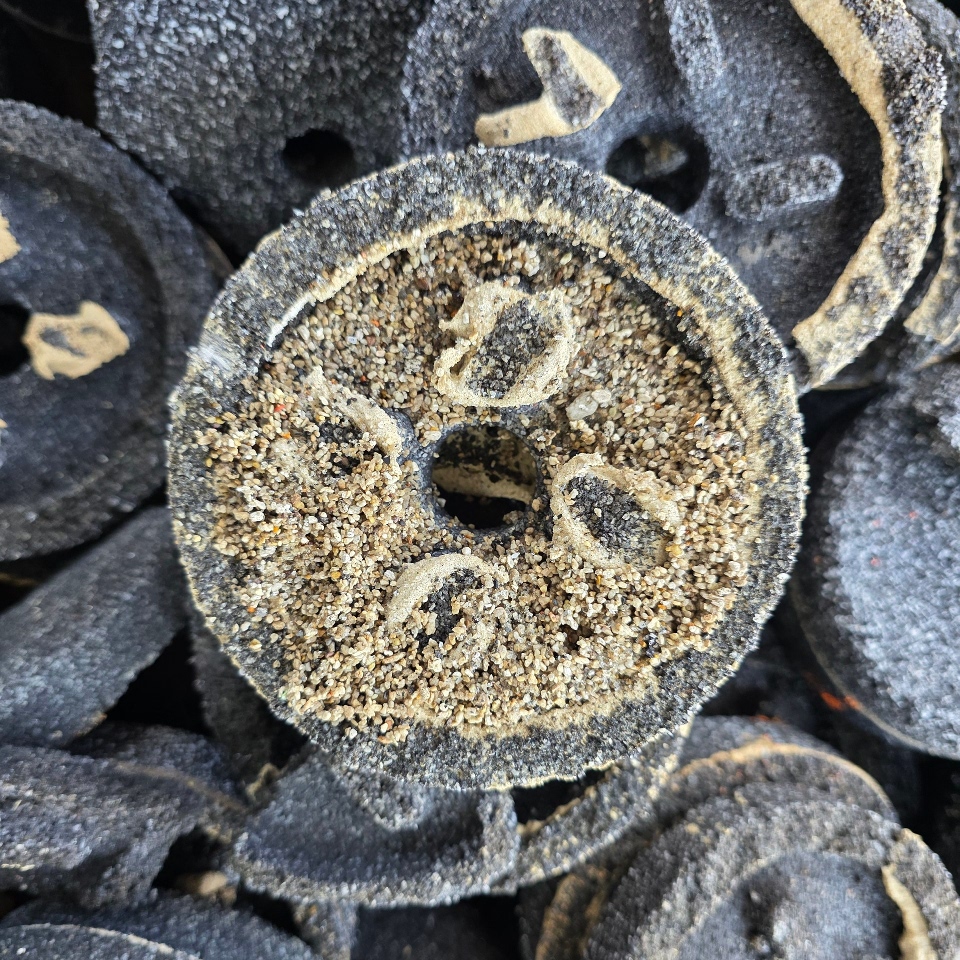
The failed nozzles in our photographs show why this testing matters. One of the clearest examples contains sand trapped inside its internal cavity.
That sand tells a story. In this failed nozzle, filter media has found a path into a space where it should not be.
A nozzle’s job includes allowing water to pass while retaining the filter media. A failure that allows sand through compromises that separation.
Other examples show broken sections and exposed internal construction. They offer an unusual view of components normally hidden beneath the filter bed, and a practical reminder of why inspection and testing matter.
A finite supply needs a longer-term plan
Recovering and testing existing ceramics can help support older installations, but it cannot create an unlimited supply. As more nozzles reach the end of their working life, treatment plant operators need suitable replacement options.
Absorb is New Zealand’s exclusive distributor of KSH Germany filter nozzles, including polypropylene options that can be assessed for existing filtration systems.
Selecting a replacement involves more than finding something that fits. It must suit the filter media, mounting arrangement, operating flows and backwash requirements.
Absorb can carry out comparative performance testing to help assess a proposed polypropylene replacement against an existing ceramic nozzle. The aim is to identify a suitable option that meets the required duty, with any improvement in performance demonstrated through testing.
Respecting the past, supporting the future
These ceramic nozzles represent a chapter of New Zealand’s filtration history that is easily overlooked because it sits beneath the sand.
At Absorb, we are working to recover serviceable examples where possible, understand the failures we encounter, and help operators plan for the future of their filters.